01 · The accidental model
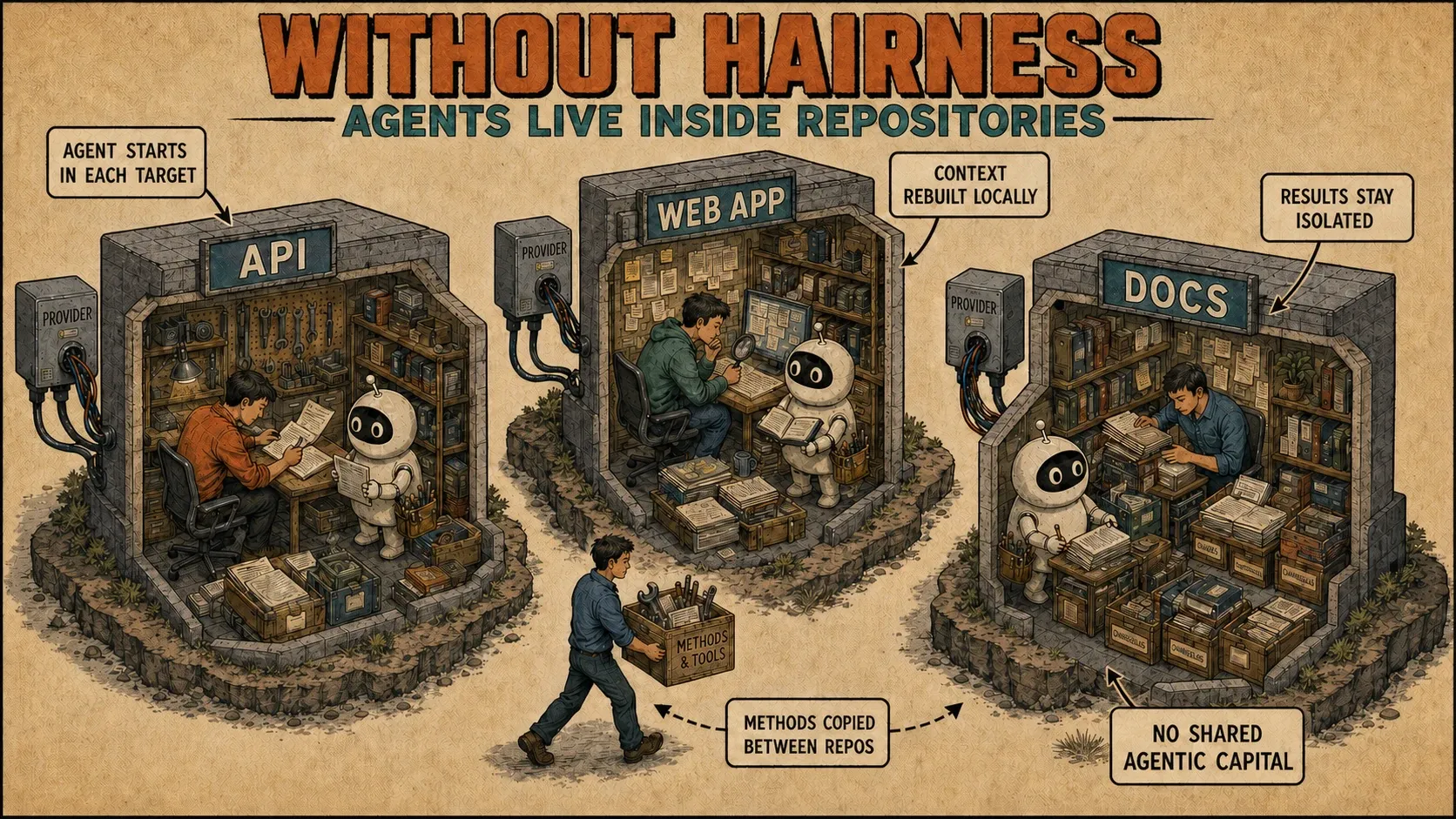
Target-first makes every repository rebuild the environment.
Most agent sessions begin inside a product repository. Local instructions, skills, methods, memories and provider configuration accumulate there because the session needs somewhere to put them. The Target becomes an accidental Home.
02 · The shift
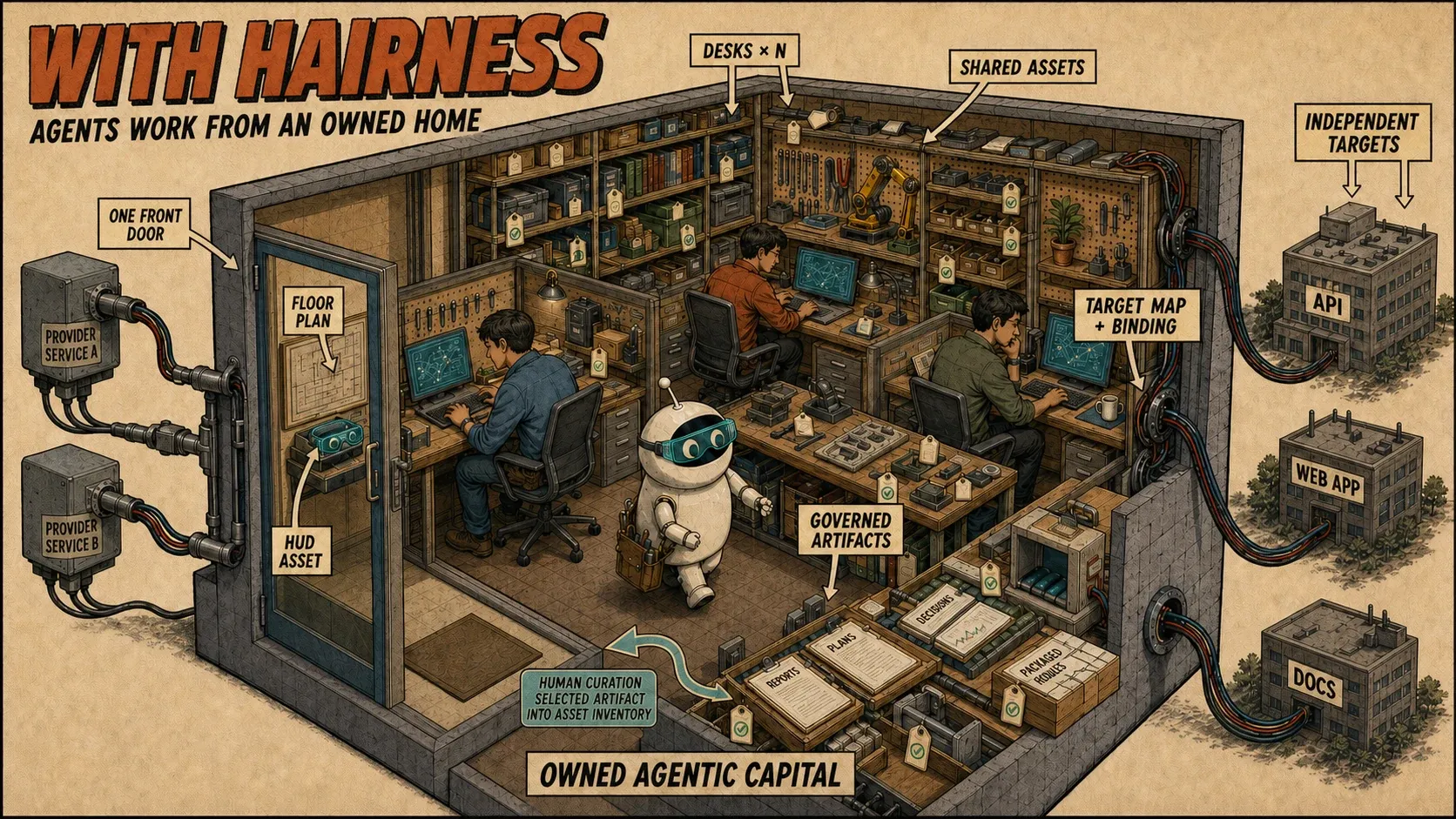
Home-first gives the environment an independent place to live.
Providers bring agents to a Front Door. The Home supplies stable orientation, the active Desk and reusable Assets. Explicit Bindings reach independent Targets without installing Hairness inside them.
03 · The ownership law
A thing should not be owned by the system that only hosts, runs or consumes it.
Home ≠ TargetThe environment is not a product repository.
Asset ≠ ArtifactEquipment is not an outcome of work.
Capability ≠ SkillA model entrypoint is not the whole product.
Source ≠ ProjectionGenerated provider files are not canonical.
Provider ≠ OwnerThe session host does not own the environment.
Conversation ≠ MemoryA chat is not durable, governed continuity.
04 · What becomes unacceptable
A paradigm is also defined by what it refuses.
- Turning every Target into a store for skills, workflows and personal continuity.
- Maintaining generated provider files as canonical sources.
- Treating a Skill as the complete abstraction for a reusable capability.
- Letting one proprietary client become indispensable to the environment.
- Promoting session output into reusable equipment without human curation.
- Mixing private continuity, shared material and product documents under one owner.
05 · Framework and paradigm
Hairness is the framework. Home-first is the wider model.
Hairness provides a working implementation of Home-first contracts: Homes, Desks, Assets, Artifacts, Targets, Bindings, Projections and a Front Door. The paradigm is deliberately larger than one framework. Other systems may one day implement Home-first with different contracts and experiences.
A provider can host the agent. It shouldn’t own the Home.